33 Published BooksR.C. Sherriff
By the outbreak of the First World War, Robert ”Bob” Cedric Sherriff had left school and begun work as a clerk at the Sun Fire Office, the same company as his father. Although his employers preferred for Sherriff not to enlist, he joined up in November 1915. He served in France until he was wounded in action on 2 August 1917 during the Battle of Passchendaele (Third Battle of Ypres), and was sent back to England for treatment. Later while on home service he was promoted firstly to Lieutenant on 5 March 1918, and then later to Captain on 8 January 1919.
In 1928 came ‘Journey’s End‘, his first and most spectacular dramatic success, which was produced by the Incorporated Stage Society and performed for just two nights at the Apollo Theatre in London on 9 and 10 December 1928. The play was set in the trenches in March 1918, and was based on his own experiences and comrades at the Western Front.
During the 1930s Sherriff went on to write several more plays which reached the West End, but never equaled that achieved by ‘Journey’s End‘, He also published the novels ‘The Fortnight in September‘ (1931), which proved popular with readers, ‘Greengates‘ (1936) and ‘The Hopkins Manuscript‘ (1939), which saw Sherriff tackle the science fiction genre. However, it was his work as a screenplay writer which yielded his most notable successes during the post-World War Two phase of his career. He was nominated for an Academy Award for Best Writing (Adapted Screenplay) and two British Academy of Film and Television Arts.
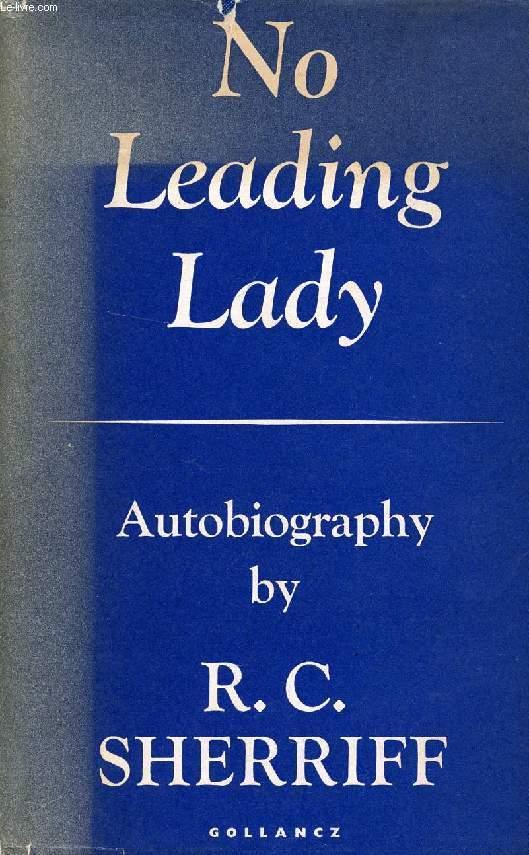
Sherriff’s memoir, ‘No Leading Lady‘, was published in 1968. He never married, and remained devoted to his mother, with whom he lived, latterly at his Esher house ‘Rosebriars’, which he had bought in March 1930.